No Safe
Harbor
About This Project
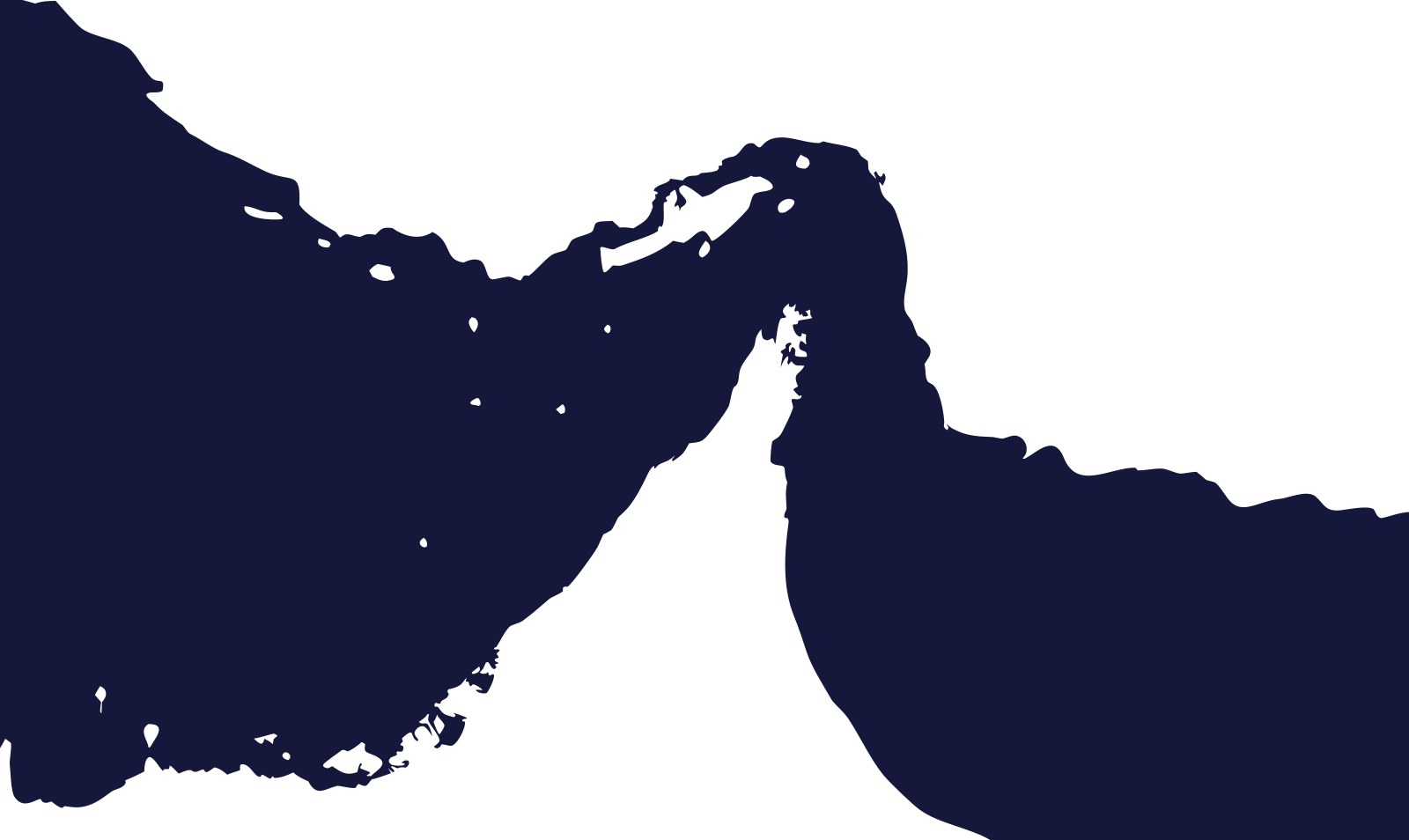
The Strait of Hormuz is the world’s most important oil chokepoint, and a distribution center for the global economy. Its closure revealed how much, and how unevenly, Asia depends on it.
The closure of the Strait of Hormuz cut off a quarter of the world’s seaborne oil and nearly a fifth of its LNG, along with the petrochemicals, fertilizers, metals, helium, and sulfur that feed manufacturing, agriculture, and consumer markets worldwide. Asia bore the earliest and heaviest costs, but the effects were anything but uniform: countries, industries, and households entered the crisis with their own exposure and capacity to absorb the impact of the crisis. Each is emerging from it differently. Even as the Strait moves toward reopening, transit constraints persist, and the confidence lost cannot simply be restored. For Asia, there is no true safe harbor.
Market Spotlights

Sector Spotlights


Simulations
Conclusions
The global economy proved more resilient than many expected — but the consequences of the closure will continue to compound. The longer volatility persists, the heavier the burden on Asia.
Political instability, supply chain restructuring, and shifting geopolitical alignments are still working their way through economies and governments across Asia. The vulnerabilities exposed by the closure are broader, deeper, and more interconnected than policymakers and markets understand. China stands out as the principal strategic beneficiary, while the United States faces a paradox: its partners need American markets and energy more than ever, yet the perception of U.S. responsibility for the crisis is pushing many of them to hedge toward Beijing. There is no return to the status quo ante — only decisions about what comes next.