Seoul Under Pressure
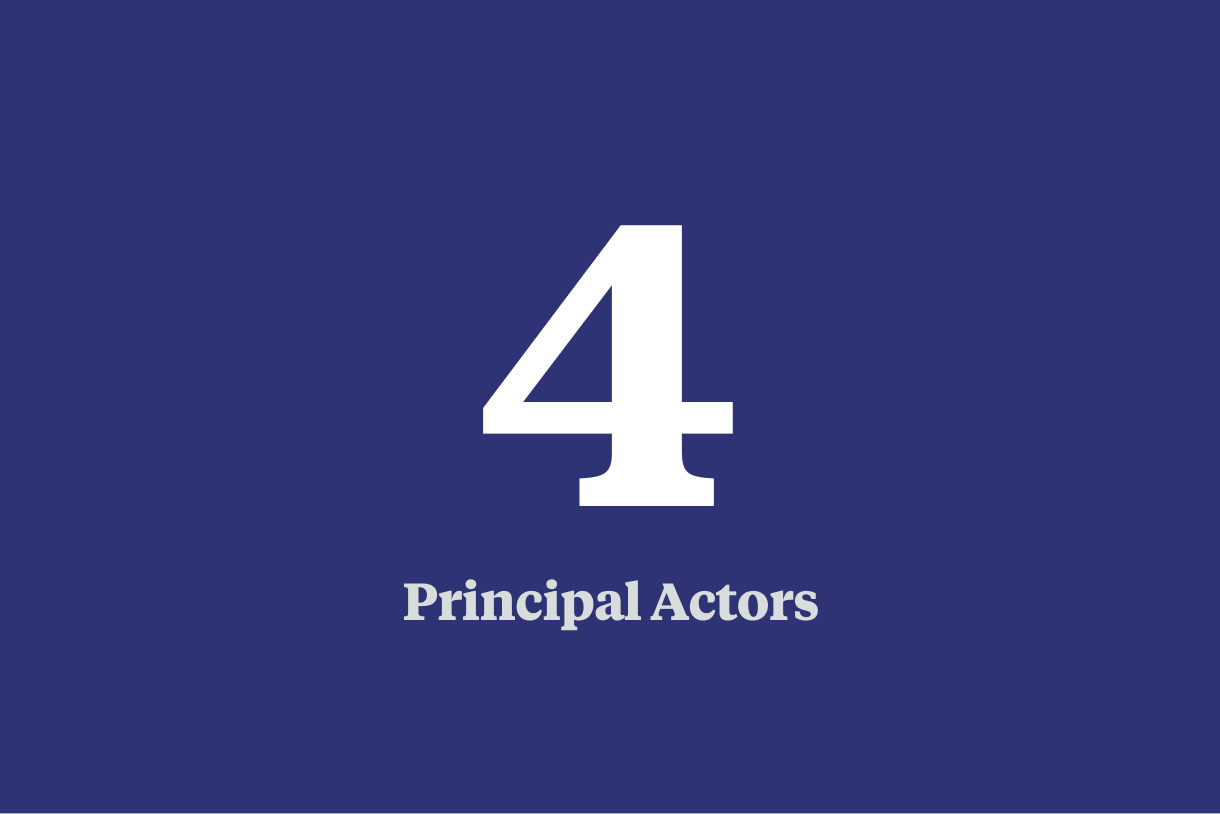
TAG’s geopolitics experts partners with our data scientists to build a proprietary AI-powered simulation to model the interactions of key players in South Korea. Four principal actors were each calibrated by regional and sectoral experts to reflect their institutional policy preferences, their political constraints, and realistic behavior under crisis conditions:
- Blue House: South Korea’s executive office, headed by the president, responsible for setting national policy, deploying emergency economic measures, and managing diplomatic relationships.
- Bank of Korea: South Korea’s independent central bank, responsible for setting interest rates and implementing monetary policy to maintain price and financial stability.
- National Assembly: South Korea’s unicameral legislature responsible for passing laws and approving the national budget, including reviewing and approving supplementary budgets proposed by the government. The ruling Democratic Party currently holds a majority of the seats.
- South Korean Conglomerates: The large, diversified industrial groups that play a strategically important role in South Korea’s economy and export competitiveness, with significant influence in key sectors such as semiconductors and energy.
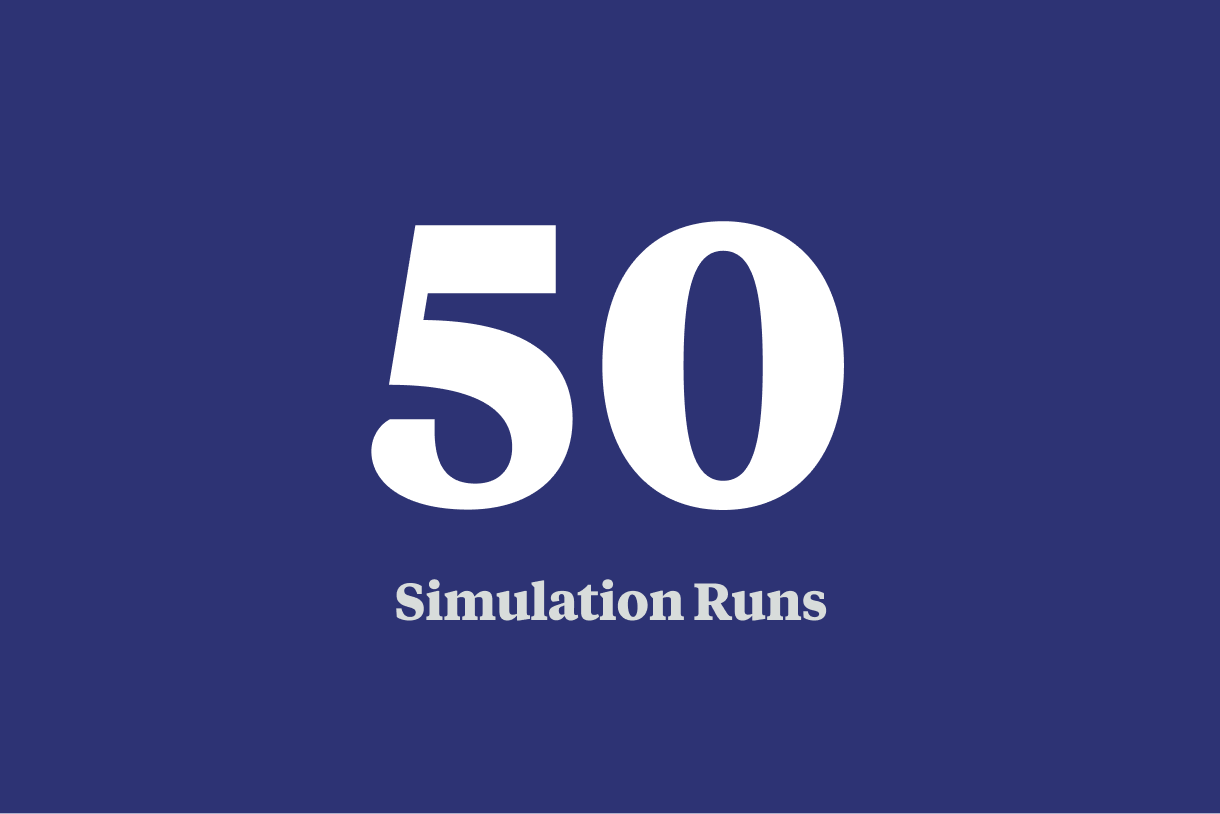
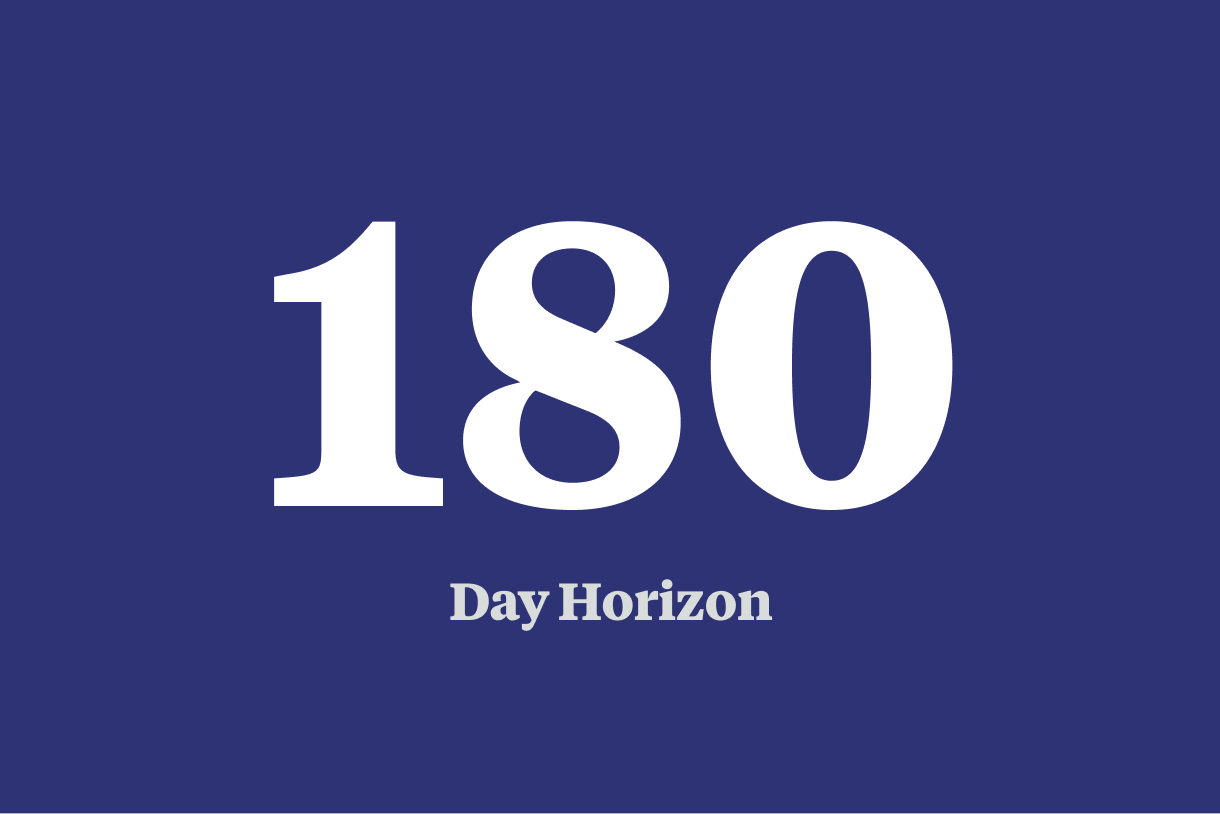
The simulation was run 50 times and modeled interactions over 180 days starting from June 11, with results assessed at the 90-day (mid-September) and 180-day (mid-December) points. Using the June 11 status quo as the reference point, each run was based on a distinct set of events in the Strait of Hormuz that produced more modest to more severe disruptions, enabling a distribution of outcomes rather than a single prediction.
Outcomes
The simulation revealed that South Korea’s institutional framework was capable of managing the initial disruption through the summer, but needed to manage a trajectory of compounding attrition with political, fiscal, and energy buffers eroding in tandem as the disruption persisted. The post-90-day period exposed not a single point of failure but a structural thinning across multiple systems simultaneously, with downstream consequences extending well beyond South Korea’s borders — most notably through jet fuel export shortfalls that would reverberate across U.S. and Indo-Pacific supply chains by December.
- South Korea manages disruptions through August, but political frictions break through by the fall under prolonged disruption scenarios. Across all runs, Seoul was able to deploy multiple policy levers to keep refineries operating at or near full capacity through August and shield households from sharp price increases at the pump. These included emergency fiscal allocations, strategic petroleum reserve swaps, price caps, compensation funds, and diplomatic support for procurement. But the continued interventions consumed political capital, weakened the won, increased losses by the state electricity utility, and left the government with less capacity by the fall to absorb further disruptions. South Korea entered Q4 with diminishing economic and political buffers as crude reserves fell and tensions mounted between the Blue House and National Assembly. Presidential approval remained relatively stable in 40 of 50 runs but fell to the mid-40s in cases where Hormuz disruptions were especially severe into the fall.
Continued interventions consumed political capital, weakened the won, increased losses by the state electricity utility, and left the government with less capacity by the fall to absorb further disruptions.
- In 80 percent of runs, jet fuel exports fell sharply by December, impacting global and U.S. supply. South Korea largely maintained jet fuel production and exports during the first 90 days from June by drawing on reserves and alternative crude supplies. In 40 of 50 runs, jet fuel exports began to drop starting in September amid continued disruptions in Hormuz. By December, simulations projected that interventions were no longer sufficient to offset the sustained crude shortfall, and jet fuel exports dropped to half of pre-crisis levels. South Korea supplies 70 percent of U.S. jet fuel imports, which would disproportionately affect operations on the West Coast and in Hawaii, as well as large shares of jet fuel imports in Australia, Singapore, Vietnam, and other southeast Asian countries. Those impacts would be worsened if Seoul restricted exports to protect domestic supply or redirected exports to higher-paying regional airlines, but it did not do so in any of the 50 runs.
By December, simulations projected that interventions were no longer sufficient to offset the sustained crude shortfall, and jet fuel exports dropped to half of pre-crisis levels.
- Semiconductor production is resilient, but in 14 percent of scenarios, helium allocation constraints led to production cuts. South Korean conglomerates maintained full production through August in every run, and into December in 43 of 50 runs, through alternative helium procurement, including from the United States. But the helium buffer is not a smooth gradient; it has a cliff edge after which shortages become not just a pricing problem but an allocation constraint. In 7 runs (14 percent), continuing severe disruptions to Hormuz transit well into the fall depleted helium reserves faster than replacement supplies could be secured. The conglomerates’ ability to pay premium prices began to falter against genuine supply constraints, which would force them to prioritize helium for their highest-margin and most strategically important production lines. This would likely mean cutting back on lower-margin legacy chip output while protecting production of high-value products such as HBM and other chips tied to AI-related demand.
- Macroeconomic pressures compound and KEPCO losses mount. The won depreciated in most runs, driven by higher import costs for crude and LNG rather than capital flow concerns. Bank of Korea coordination occurred in runs where exchange rate stress combined with inflation pressure. The most significant financial liability produced in every single run was the state electrical utility’s (KEPCO) accumulated losses. The government’s electricity tariff freeze, which was sustained in all runs against rising fuel input costs, generated additional losses in each monthly turn, with no resolution mechanism emerging across any outcome within the simulation’s 180-day horizon.
Simulation Insight: How Actors Navigated Key Tensions
- Blue House: The Blue House’s core decisions were the same in every run: renew the petroleum price cap, secure supplementary fiscal authorization for the compensation mechanism, and maintain refinery throughput through strategic petroleum reserve swap deployment. The variation across runs came from the conditions under which authorization was obtained and the margins that remained afterward.
- Blue House-National Assembly: The Blue House and the National Assembly successfully cooperated to pass supplementary budgets and reauthorizations, reflecting the advantages of a unified government. However, the National Assembly consistently pressed for larger supplementary budget authorizations than the Blue House requested, conditioned on transparency requirements and phased disbursement oversight despite the Blue House’s preferences for fewer conditions. The result was a recurring negotiation that left the Blue House with incrementally less capital for the next budget cycle. By December, in the majority of runs in which the Strait of Hormuz remained disrupted, the negotiating dynamic became harder to manage: as fiscal exposure mounted and public scrutiny increased, lawmakers were more reluctant to provide open-ended authorizations and more inclined to attach oversight conditions.
- Korean Conglomerates: On semiconductor and helium supply security, South Korean conglomerates cooperated consistently with government: providing supply chain intelligence, activating procurement consortia for non-Hormuz helium sources, and supporting smaller ecosystem firms through voluntary buffer redistribution programs.
- Bank of Korea: The Bank of Korea maintained a consistently hawkish monetary stance across all runs — holding the policy rate in 29 runs and raising it in 21, with hikes concentrated in runs where won depreciation showed signs of transmitting into core inflation.
“In-Game” Insights
- The National Assembly signaled willingness to expand funding beyond initial proposals from the Blue House, reflecting political incentives to demonstrate a strong fiscal response during a crisis.
- The National Assembly accelerated its decisions on refinery support measures as depreciation of the South Korean won increased liquidity pressures on energy importers.
- In one run, leading chipmakers shared a confidential helium depletion report with the Blue House and the Assembly to prompt fiscal and diplomatic interventions.
About the Simulation
The Asia Group’s machine learning engineers and data scientists, in partnership with in-house regional experts, built a proprietary agent-based simulation of geopolitical decision making to chart out possible scenarios for how an extended closure of the Strait of Hormuz would affect Asian markets.
In the simulation, each actor (a state, agency, leader, company, constituency) is an autonomous AI agent that reasons over its own interests, forms beliefs, negotiates, and acts, while a central adjudicator (Control Center) governs the world and resolves each turn. Agent profiles are shaped by TAG’s country experts while behavior is constrained and calibrated by quantitative models, and every outcome is resolved probabilistically. Because the engine samples many parallel futures rather than one, it yields distribution over plausible outcomes instead of a single guess — letting analysts stress test decisions and surface low-probability escalation paths.