ABOUT THIS PROJECT
In recent years, a series of shocks has rattled the global economy and disrupted global supply chains. The COVID-19 pandemic, Russia’s invasion of Ukraine, and attacks on commercial shipping in the Red Sea triggered price shocks in sectors ranging from fertilizer to semiconductors. In some cases, initial fears of catastrophic shortages proved overstated as markets adapted; in others, seemingly manageable disruptions had cascading long-term effects. In each case, governments and businesses underestimated both the speed with which vulnerabilities could spread through interconnected markets and the difficulty of forecasting where the greatest pressure points would emerge. The most important lesson from these episodes lies not in the disruptions themselves, but in how their effects reverberated through the global economy.
The same is true of the disruptions to transit through the Strait of Hormuz since March 2026.
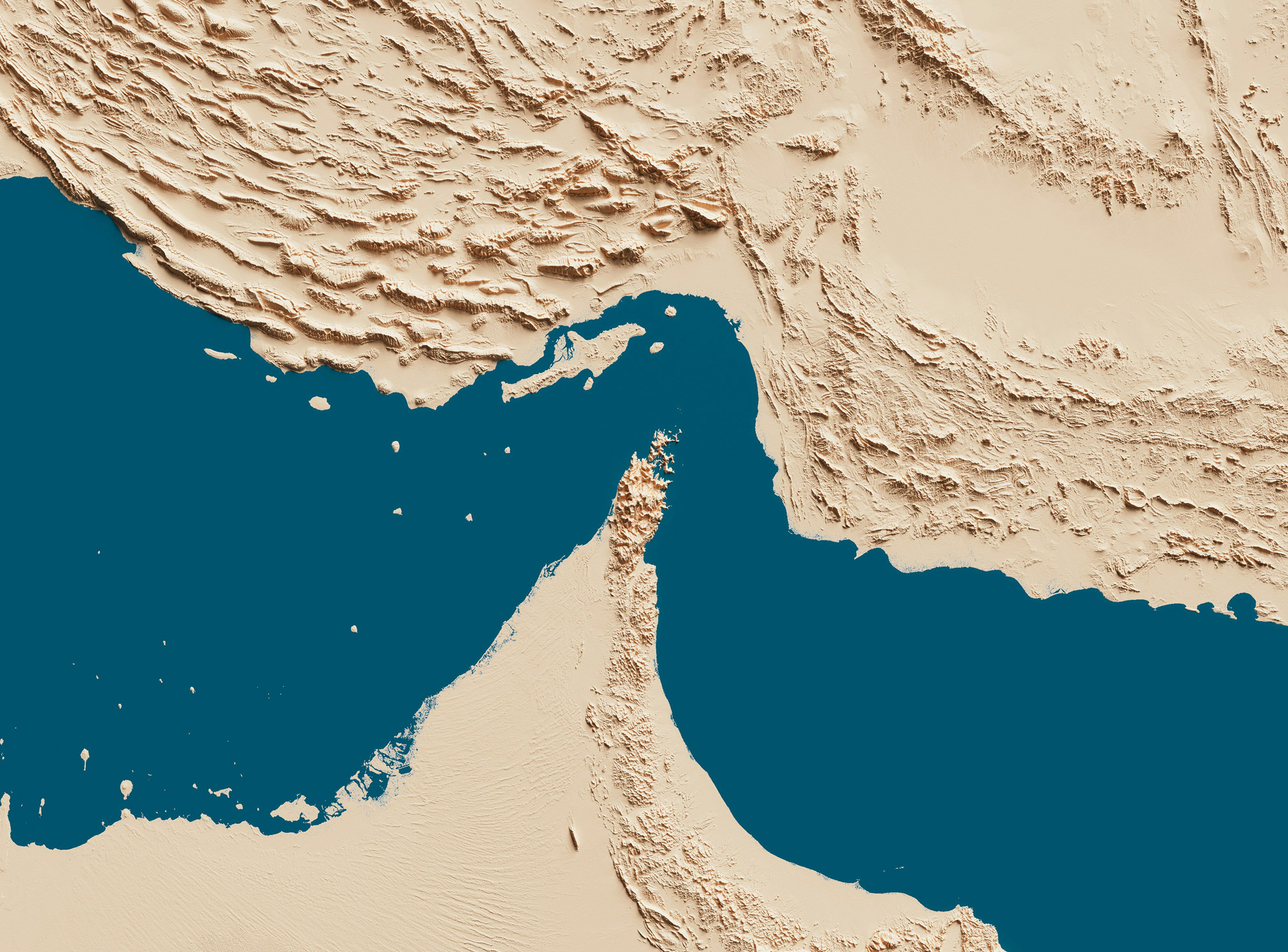
The Strait has long been understood as the world’s most important chokepoint for oil and liquefied natural gas (LNG). But its closure highlighted that it is also a complex distribution center for the global economy: a major point of transit for the petrochemicals, plastics, aluminum, helium, sulfur, and fertilizers that feed into manufacturing, agriculture, and consumer markets worldwide. Follow these commodities through the supply chain and, in time, the result is more expensive food, medical supplies, manufacturing inputs, and consumer goods – a web of reinforcing pressures that amplifies the economic disruptions far beyond the immediate geography of the Gulf.
Nowhere have the shocks been felt more acutely than in Asia. Prior to the closure of the Strait, roughly 80 percent of the oil and nearly 90 percent of the LNG transiting the waterway was destined for Asian markets, along with a significant share of other critical commodities. Disruptions hit economies across the region rapidly but unevenly. China, India, Japan, South Korea, and the countries of Southeast Asia all depend on Gulf energy but entered the crisis with different levels of reserves, exposure, and fiscal capacity. Within countries, the picture was similarly varied: energy-intensive industries such as chemicals, steel, and aviation faced rising costs, while domestic energy producers and logistics providers stood to benefit. Lower-income households bore a disproportionate share of higher fuel, food, and transportation prices, while better-resourced companies and governments could absorb higher costs. The Hormuz closure has produced not a single economic effect but a highly uneven pattern of losses, gains, and adaption.
Nor did those effects end when the fighting stopped. Early indications are that despite the ceasefire, transit disruptions and constraints persist. In this new environment, Iran can continue to impose restrictions on transit through selective inspections, security reviews, insurance approvals, or other forms of administrative control. The result could be differential treatment among shipping companies and countries, with states that maintain stronger political relationships with Tehran enjoying relative advantages — or a Strait that is bifurcated between zones of Iranian and Omani or U.S. control.
Other consequences will linger, too. Damage to Gulf energy infrastructure, uncertainty over future navigation rights and tolls, elevated insurance costs, and doubts about the safety of maritime transit will not immediately resolve. Businesses are reassessing inventory management practices, supplier concentration risks, and logistics networks. Governments are examining opportunities to expand strategic reserves, diversify suppliers, develop alternative transportation routes, and increase energy sovereignty. The Hormuz crisis will shape risk assessments, contingency plans, and diversification strategies in capitals and boardrooms for years to come.
This is the least disruptive scenario. If the ceasefire falters or breaks down entirely, the pressures described in this report would intensify and compound.
The question now is not whether the world returns to pre-crisis conditions, but how governments and markets adapt to a future in which the reliability of one of the world’s most important trade corridors can no longer be taken for granted. These questions are most acute in Asia. Asian countries remain deeply dependent on the flow of trade through a small number of strategic chokepoints, many of which sit at the intersection of intense geopolitical competition. The resumption of shipping alone cannot restore the confidence that has been lost. For Asia, there is no true safe harbor.
About This Project
Against this backdrop, The Asia Group (TAG) is launching a new initiative to assess what comes next: the secondary impacts and slower-moving ripple effects of the Strait of Hormuz disruptions for Asia, through Asia’s leading markets for the global economy, and for the United States — an Indo-Pacific power deeply integrated with the region’s major economies through trade, finance, technology, and energy markets. While the United States may be less directly dependent on Gulf energy imports than many Asian economies, it is not insulated from the broader consequences of higher energy prices, supply chain disruptions, financial volatility, and slower growth among key trading partners.
Our study focuses on Asia’s four largest economies — China, India, Japan, and South Korea — and five major emerging markets in Southeast Asia: Indonesia, Malaysia, the Philippines, Thailand, and Vietnam. Across these countries, we examine the macroeconomic, political, and geopolitical repercussions of the Strait closure and its impacts on key sectors such as manufacturing, agriculture, and energy. To underpin our analysis, TAG mapped each economy’s pre-conflict dependencies across nearly a dozen commodity and product areas heavily impacted by the Strait closure: crude oil, LNG, liquid petroleum gas (LPG), naphtha, diesel, gasoline, jet fuel, methanol, ammonia, sulfur, and helium.
The findings integrate across these three dimensions — markets, sectors, and commodities — to reveal how disruptions compound and interact across the region’s interconnected economies.
Two core assumptions underpin our work: that any reopening of the Strait will be gradual, selective, and vulnerable to renewed disruption; and that supply chain dislocations already set in motion will continue to generate secondary and tertiary effects — including some not yet visible in available data.
Our analysis draws on TAG’s cross-cutting expertise and on-the-ground teams in more than a dozen markets across the Indo-Pacific and the Gulf, integrating contributions from former senior officials, sector specialists, wargaming experts, and data scientists. A central component of the analytical framework is TAG’s proprietary AI-powered scenario modeling platform, which simulates how governments, firms, central banks, and other actors are likely to respond under crisis conditions. Rather than converging on a single forecast, the platform runs dozens of parallel scenarios to map a range of plausible futures and surface non-obvious risks and interdependencies that traditional analysis tends to miss. TAG’s analysis and findings were also reviewed by an external advisory committee of leading experts in economics, business, and national security.